Williamson County Court serves as the main point of reference for all courts operating within Williamson County, covering civil, criminal, traffic, probate, family, and juvenile matters. Residents often use this single term when searching for court info, courthouse details, or public service steps, which makes this section a strong entry point for visitors who need quick facts. The system connects several judicial offices that work across the county, each handling specific case duties. Many people rely on this combined term because it keeps their search simple and direct.
This page gives clear, search-focused details about each courthouse, core services, case categories, and public record options, written to match real user intent. Key phrases such as Williamson County Court, county courthouse, court services, and judicial offices appear naturally to help both readers and search engines understand the purpose of the site while keeping the content smooth and easy to follow. It offers a practical starting point for anyone trying to check schedules, find case info, or plan a courthouse visit. The goal is to make everything easy to read so visitors reach the right office without confusion.
What is the Williamson County Court
Williamson County Court uses multiple courts to handle different types of cases, including civil disputes, criminal charges, probate matters, traffic violations, and juvenile issues, ensuring that each case is directed to the proper court efficiently.
Circuit, Chancery, and Probate Courts
Circuit, Chancery, and Probate Courts manage major civil cases, family matters, property disputes, and estates, with Circuit Court handling financial and contract disputes, Chancery Court focusing on equity and property rights, and Probate Court overseeing wills, guardianships, and estate administration.
General Sessions Court
General Sessions Court handles faster-moving cases such as traffic violations, small claims, misdemeanor offenses, early felony hearings, bond settings, and warrants, acting as the first point of contact for many residents before cases move to higher courts.
Criminal Court / Circuit Criminal Court
Criminal Court manages serious criminal cases, including felonies, grand jury indictments, trials, plea agreements, and sentencing, often receiving cases from the General Sessions Court and coordinating with prosecutors, defense attorneys, and law enforcement to maintain an orderly criminal docket.
Juvenile Court and Magistrate Offices
Juvenile Court addresses cases involving minors, such as truancy, delinquency, child dependency, custody disputes, and emergency petitions, while Magistrate Offices support by issuing warrants, setting bonds, and handling early appearances for time-sensitive matters.
How Cases Move Through the System
Civil matters like divorces, estates, and property disputes go to Circuit, Chancery, or Probate Courts, traffic tickets and misdemeanors start in General Sessions, felony cases shift to Criminal Court, juvenile matters go to Juvenile Court, and Magistrates handle urgent filings like warrants and first appearances.
Role of the Court Clerk’s Office
The Court Clerk’s Office manages filings, dockets, official records, court schedules, and public requests, serving as the main point of contact for residents seeking certified documents, forms, case information, and fine payments while keeping the county’s court system organized and efficient.
Search Case Lookup, Records & Docket
Users can search for cases, public records, and dockets in Williamson County Court by using basic details such as full name, case number, citation, or filing date. To perform a search, start by gathering the required information and choosing the correct portal depending on the type of record.
How to Search
- Identify the type of case or record – civil, criminal, traffic, probate, or public filings.
- Collect search details – name, case number, citation number, date of birth, or filing date.
- Select the correct search portal – official court website or authorized third-party portal.
- Enter the information accurately – multiple parameters help improve search results.
- View results and download records if needed – check for fees or restrictions on certain records.
Where to Search
Official and reliable portals for Williamson County case and record searches include:
- Williamson County Court Case Search (Civil, Criminal, Traffic, Probate): https://www.wilcotx.gov/257/Court-Lookup
- Public Records and Filings: https://os.dc.gov/page/office-public-records-and-archives
- Docket Search / Court Calendar: https://www.dcd.uscourts.gov/court-calendars
- Inmate / Arrest Records (Sheriff’s Office): https://doc.dc.gov/page/locate-inmate
Official portals provide accurate, up-to-date information. Third-party sites may offer convenience, but results might not always reflect recent updates.
Record Search Fees and Downloads
| Record Type | Search Portal / URL | Download / Copy Fee | Notes / Limitations |
|---|---|---|---|
| Civil Case Records | Case Search | $1–$5 per page | Sealed records not available |
| Criminal Case Records | Case Search | $2–$10 per page | Juvenile cases confidential |
| Traffic Cases | Case Search | $1–$5 per page | Limited online access |
| Probate Cases | Case Search | $3–$10 per page | Some filings restricted |
| Public Records | Public Records | $0–$5 per copy | Certain documents require certified copies |
| Docket / Court Calendar | Docket Search | Free | Updated weekly, subject to changes |
| Inmate / Arrest Records | Sheriff’s Office | Free | Only the current custody status is available |
What Services Does Williamson County Court Provide?
Williamson County Court provides comprehensive judicial and administrative services for civil, criminal, family, and minor cases, ensuring residents and legal professionals can access the right courts for their needs efficiently. Each court division is responsible for handling specific case types, from traffic violations to probate matters.
Civil Cases
Civil matters in Williamson County, managed by Circuit, Chancery, and Probate Courts, cover disputes between individuals, businesses, or estates rather than criminal offenses. Common cases include lawsuits, small claims, divorces, name changes, property disputes, and probate matters, such as wills and estates. Residents filing civil cases should identify the correct court for their issue to ensure proper filing, and official court records are available for accurate, up-to-date information.
Criminal Cases
Criminal matters are divided between the General Sessions Court and the Circuit Criminal Court based on case severity.
- General Sessions Court handles misdemeanors, minor felonies, and traffic-related offenses. Common services include:
- Preliminary hearings and arraignments
- Traffic offenses and ticket disputes
- Bond hearings and warrants
- Circuit Criminal Court deals with serious criminal cases, including felonies, grand jury indictments, and complex prosecutions.
Individuals charged with a criminal offense should contact the correct court division to determine filing procedures, hearing dates, or bond requirements. Both courts provide access to dockets, case histories, and public records related to criminal proceedings.
Traffic, Small Claims, and Minor Offenses
General Sessions Court also oversees less complex matters, such as traffic tickets, small claims cases under the monetary limit, and other minor offenses. Services include:
- Handling routine traffic violations and fines
- Resolving disputes in small claims court, including property or contract issues under the small claims threshold
- Conducting hearings for minor criminal or civil infractions
This court is the first stop for residents who need civil hearings or the resolution of minor legal issues without extensive litigation.
Family, Domestic, and Juvenile Matters
Family and juvenile cases, including divorces, child custody, name changes, and delinquency or dependency matters, are handled by Circuit, Chancery, or Juvenile Courts, depending on the issue. Some emergency or temporary orders, such as protection orders, may involve Magistrates, and residents should ensure they file in the correct court to receive timely resolutions.
Records and Public Records Access
Williamson County provides official access to court and public records, including case histories, dockets, filings, charges, and pleadings. While third-party sites may offer limited information, residents are encouraged to use the official court system for accurate records, which can often be requested online, in person, or via email, depending on the record type.
Clerk and Magistrate Services
The Circuit Court Clerk assists with filing pleadings, e-filing civil documents, issuing certified copies, and guiding residents on procedural requirements. Magistrates handle initial proceedings such as warrants, bonds, and temporary orders, ensuring urgent matters are addressed efficiently and supporting the overall operation of Williamson County Court services.
How to Use Court Services — Filing, Records, e‑Filing & Public Access
If someone needs to start a legal matter, get records, or check court schedules, the Williamson County Circuit Court (and related courtshandlesle filings, record-keeping, e-filing, and public access. The process differs depending on the case type, and the county offers e-filing, public records search, and docket viewing for transparency.
Filing a New Case
When starting a case, the filer must go to the court that matches the case type:
- Civil cases over $25,000, divorces, name changes, condemnations, and appeals should be filed with the Circuit Civil Court.
- Criminal cases (felonies, grand jury indictments, serious offenses) go to the Circuit Criminal Court.
- Small claims and civil disputes under $25,000, or actions like detainer warrants or writs of possession, belong in the General Sessions Civil Court.
- Traffic tickets and lower-level criminal warrants go to General Sessions Criminal/Traffic Court.
Before filing, a person should identify their case type — civil, criminal, small-claims, traffic, probate, etc. — and approach the appropriate court.
e‑Filing / Paperless Filing
Since July 1, 2022, all filings in Circuit Civil Court are fully paperless. Filers must register for the county’s e-file system to submit pleadings, exhibits, and other documents electronically. Paperless filing speeds up processing, ensures accurate record-keeping, and allows parties to track their cases online. For small-claims or lower-level civil/traffic matters, electronic filing may also be available depending on local rules.
Requesting Court Records / Public Records
To obtain court documents or public records:
- Use the Williamson County Archives index for older records, including wills, deeds, marriages, probate, and some court files.
- For current or recent records (criminal, civil, traffic, divorce, probate), submit a request to the appropriate clerk’s office.
- Tennessee residents can request public records under the Tennessee Public Records Act.
- Requests can be made to inspect records or obtain copies, often requiring a written form and a valid ID.
- Provide identifying information such as case number, party names, or date filed.
Available records often include criminal court files, traffic infractions, marriage/divorce records, property deeds, or probate files.
Viewing Dockets / Court Calendars
To check upcoming hearings, bond dockets, traffic dockets, or court schedules:
- Dockets summarize case proceedings, including parties, attorneys, filing dates, hearing dates, and status.
- Calendars show scheduled hearings for civil, criminal, and traffic courts.
- Checking schedules ahead helps individuals confirm hearing dates or bond dockets.
What to Bring / How to Prepare for Court Services
When filing or requesting records, people should bring:
- Case number or full names of parties involved
- Valid photo ID
- Relevant documents (pleadings, exhibits, forms)
- Payment for filing or copy fees
- Attorney information if represented, or contact info if self-represented
Having these items ready helps the clerk’s office process requests efficiently.
Contacting the Court Clerk / Judges / Magistrates
For inquiries about filings, records, or dockets, contact the Circuit Court Clerk’s office:
- Address: Williamson County Judicial Center, 135 4th Ave South, Franklin, TN 37064
- Phone: (615) 790‑5454
- Fax for different divisions:
- Circuit Civil: (615) 790‑5432
- Circuit Criminal: (615) 790‑5411
- General Sessions Civil: (615) 790‑5483
- General Sessions Criminal/Traffic: (615) 790‑5478
Williamson County Archives, 611 W. Main Street, Franklin, TN; phone (615) 790‑5462, email archives@williamsoncounty-tn.gov.
Additional Public Resources & Court-Affiliated Offices
Williamson County provides a variety of public resources and court-affiliated offices to support legal processes, research, and administrative services. These offices assist residents with matters ranging from initial court appearances to access to vital and historical records. Knowing which office handles a specific task can save time and ensure proper handling of sensitive information.
Magistrates and Judicial Commissioners
Magistrates and Judicial Commissioners handle urgent court matters, such as initial appearances, warrants, bond hearings, and ex parte orders. The Magistrate’s Office is typically the first stop for individuals dealing with new charges, arrests, or temporary court orders. In contrast, routine hearings and ongoing case proceedings are conducted in regular courtrooms.
Residents can expect magistrates to:
- Conduct initial court appearances for criminal defendants
- Issue arrest and search warrants
- Set bond amounts
- Grant temporary ex parte orders
Visiting the Magistrate’s Office ensures that urgent matters are addressed promptly and in accordance with local legal procedures. Understanding the distinction between magistrate duties and regular court sessions can prevent unnecessary delays in legal processes.
Archives and County Records
The Archives Department maintains historical records, court case files, and public documents that are important for research, genealogy, and legal purposes. These archives often include property deeds, past court cases, and other official documents. Some records may be available online, but many require in-person visits to verify authenticity and completeness. Residents and researchers should always confirm that they are accessing official county resources rather than relying on third-party websites. Using official archives guarantees accurate information and protects sensitive data from potential misuse.
Other Departments and Public Services
Williamson County also offers several departments that support public needs, depending on availability. These include offices for public defenders, vital records, and property documentation. Birth, marriage, and death certificates are typically managed by the County Clerk, and property records are maintained for legal and administrative purposes. While some services can be accessed online, it is recommended to verify official status and avoid third-party aggregators for legal or sensitive matters. These offices help residents handle personal, historical, and legal documentation efficiently.
History & Significance of the Courthouse
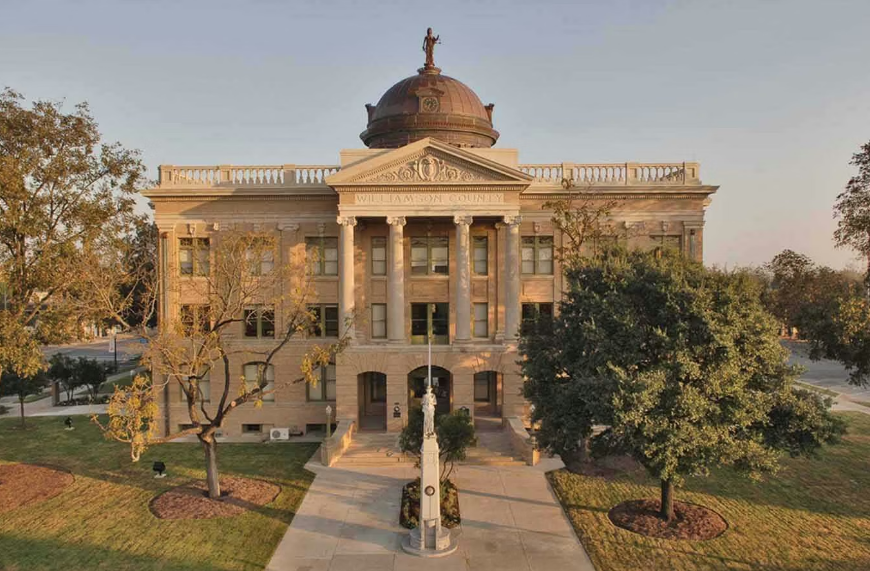
The Williamson County Courthouse in Franklin, Tennessee, traces its roots to an original log structure around 1800 and has evolved through two major rebuilds. The current building, erected from 1856 to 58 in Greek Revival style, stands as a recognized historic courthouse on the National Register of Historic Places.
Early courthouses: log and brick beginnings
- The first courthouse for Williamson County was a simple log structure built about 1800.
- By 1806, that log building was replaced by a sturdier two‑story structure made of well-burnt brick on a stone foundation. It featured a central location in the Public Square and had a framed cupola with a bell.
- That brick courthouse served the county for decades, but by the mid-1850850, the county court sought a more impressive and durable building.
This early evolution shows how deeply the courthouse is part of the county’s heritage — reflecting early civic needs and the growth of the community.
The current historic courthouse: 1856–58
The third and present courthouse was built between 1856 and 1858 at a cost of approximately $27,594.19 for land and building.
Key features:
- Designed in Greek Revival style — one of only a few antebellum courthouses still in use in Tennessee.
- Four tall Doric columns at the front portico, cast from iron forged locally and then shaped at a Franklin foundry.
- The building sits on Courthouse Square and has served as a civic symbol for the county for more than 160 years.
This third courthouse represents the county’s commitment to stability, community identity, and public architecture worthy of long-term use.
Historic significance and notable uses
Over the decades, the courthouse has witnessed many critical and sometimes dark chapters of local history:
- During the American Civil War, it served as a federal headquarters, and after the Battle of Franklin in November 1864, the building’s offices were used as a hospital for wounded soldiers.
- The surrounding grounds once hosted hangings, branding, and corporal punishments after criminal convictions — a reminder of early law enforcement practices.
- A powerful tornado struck the courthouse on April 1, 1873, causing significant damage.
These events make the courthouse more than just a building — it is a witness to the county’s legal, social, and wartime history.
Preservation, renovations, and continued use
The courthouse has undergone multiple updates to keep it functional while preserving its heritage:
| Year / Period | Work Done |
|---|---|
| 1937 & 1964 | Interior remodels. |
| 1976 | A new Annex was added to expand county offices without altering the historic main building. |
| 2009 | Completed a $7.3 million renovation focused on preserving historic integrity. |
Because of these efforts, the courthouse still houses county departments, including a U.S. Congressman’s office, public defender, and other government offices.
Court Hours, Schedules & Dockets
Williamson County Court generally operates Monday through Friday, from 8:00 a.m. to 4:30 p.m., providing public access to the Clerk’s Office and various court divisions. Court hearings follow a structured docket system, which organizes cases by type and day to ensure efficiency.
General Court Hours
The main Clerk’s Office is open during standard business hours for filing documents, paying fines, and requesting records. Individual judges’ chambers and divisions also maintain similar ho, urs but may require appointments for specific matters. Typical hours include:
- Clerk’s Office: 8:00 a.m. – 4:30 p.m., Monday–Friday
- Civil Court Division: 8:30 a.m. – 4:00 p.m.
- Criminal Court Division: 8:30 a.m. – 4:00 p.m.
- Traffic Court Division: 8:30 a.m. – 4:00 p.m.
- Mental Health Court Division: By appointment, typically 9:00 a.m. – 3:00 p.m.
These hours provide consistency for those scheduling hearings or managing case-related tasks.
Sample Weekly Court Schedule
The Williamson County Court uses different dockets for each type of case, helping the public and legal professionals know when to appear. A sample weekly schedule may look like this:
| Day | Docket Type | Typical Hearing Times |
|---|---|---|
| Monday | Civil Docket | 9:00 a.m. – 12:00 p.m. |
| Tuesday | Criminal Docket | 9:00 a.m. – 3:00 p.m. |
| Wednesday | General Sessions / Bond Docket | 8:30 a.m. – 11:30 a.m. |
| Thursday | Orders of Protection / Civil Docket | 9:00 a.m. – 2:00 p.m. |
| Friday | Traffic & Parking Docket | 8:30 a.m. – 12:00 p.m. |
This schedule may vary depending on holidays or special court sessions, so checking the court docket or court calendar is recommended before attending.
How Court Docket Scheduling Works
Each type of case is assigned to a specific day and docket. For example:
- Traffic hearings are often on Fridays to streamline minor infractions.
- Criminal cases may take multiple days, depending on complexity.
- Civil matters are scheduled early in the week to allow time for follow-ups.
The court posts hearing times and docket lists online and in the Clerk’s Office, so parties can confirm their exact court schedule and plan attendance accordingly. Understanding the docket structure helps ensure timely participation in hearings and reduces unnecessary delays.
Court Locations & Contact
The main courthouse for Williamson County Court is located at 135 4th Avenue South, Franklin, TN 37064. Other court‑related facilities, such as the Magistrates’ Office, Juvenile Court, and Detention Center, are located at 408 Century Court, Franklin, TN 37064.
Primary Courthouse / Judicial Center
The central courthouse houses the Circuit Court, Chancery Court, General Sessions Court, and Probate Court.
Main phone number (Clerk’s Office): (615) 790‑5454
Fax numbers vary by division: Civil filings go to (615) 790‑5432, and criminal filings to (615) 790‑5411.
Other Court‑Related Facilities
Some court services operate from a separate complex at 408 Century Court, Franklin, TN 37064.
These include: Magistrates.
- Magistrates’ Office / Judicial Commissioners — handles initial hearings, bonds, arrests, and warrants.
- Juvenile Court & Juvenile Services — manages cases involving minors, custody, dependency, and delinquency.
- Juvenile Detention Center —a short‑term secure facility for juveniles awaiting adjudication or transfer.
Directions & How to Get There
For visitors coming from Nashville:
- Take I‑65 and use Exit 65 (Franklin / Hwy 96).
- Turn right (west) onto Murfreesboro Rd / Hwy 96.
- Continue to the 5th traffic light, then turn left onto Mack Hatcher Pkwy.
- Go to the 4th traffic light, then turn right onto Columbia Ave / Hwy 31.
- At the 2nd light, turn left onto Century Court.
- The Magistrate’s Office, Juvenile Court, and Detention Center will be on the right.
Visitors coming from Columbia, TN, can follow a similar route using Exit 65, then follow the signs to Century Court.
Contact Numbers Summary
| Office / Facility | Address | Phone / Fax |
|---|---|---|
| Judicial Center (Circuit / Chancery / General Sessions) | 135 4th Ave South, Franklin, TN 37064 | (615) 790‑5454; Civil Fax: (615) 790‑5432; Criminal Fax: (615) 790‑5411 |
| Juvenile Court & Juvenile Services | 408 Century Court, Franklin, TN 37064 | (615) 790‑5812; Fax: (615) 790‑5437 |
| Magistrates Office (Judicial Commissioners) | 408 Century Court, Franklin, TN 37064 | (615) 790‑5813; Fax: (615) 595‑1284 |
| Juvenile Detention Center | 408 Century Court, Franklin, TN 37064 | (615) 790‑5817 (24/7) |
(FAQ) About Williamson County Court
Williamson County Court manages civil, criminal, traffic, and small claims cases for residents, providing efficient and reliable judicial services.
What is Williamson County Court?
Williamson County Court is a local judicial body that oversees legal disputes, criminal cases, and civil matters within the county. It provides court services through its various divisions, including Circuit Court, General Sessions Court, and Probate Court.
What types of cases are handled in Williamson County Court?
The court manages:
- Civil cases – disputes between individuals or organizations.
- Criminal cases – misdemeanor and felony prosecutions.
- Traffic violations – tickets, speeding, and driving offenses.
- Small claims – cases involving smaller amounts of money, typically under $25,000.
Where is the Williamson County Courthouse located?
The main courthouse is located at:
1320 West Main Street, Franklin, TN 37064.
This central location houses the court clerk’s office, judicial chambers, and public records departments.
What are the hours of operation for the court clerk and judges?
The court clerk’s office is typically open Monday through Friday, 8:00 AM to 4:30 PM.
Court sessions generally follow a schedule set by individual judges, often starting in the morning and ending by mid-afternoon. Specific times may vary depending on the court division.
How do I file a case civilcriminall/ traffic / small claims)?
Cases can be filed in person at the clerk’s office or, for certain case types, through the county’s e-filing system. Filing requirements differ depending on the case type, including forms, fees, and supporting documentation.